28 April 2026
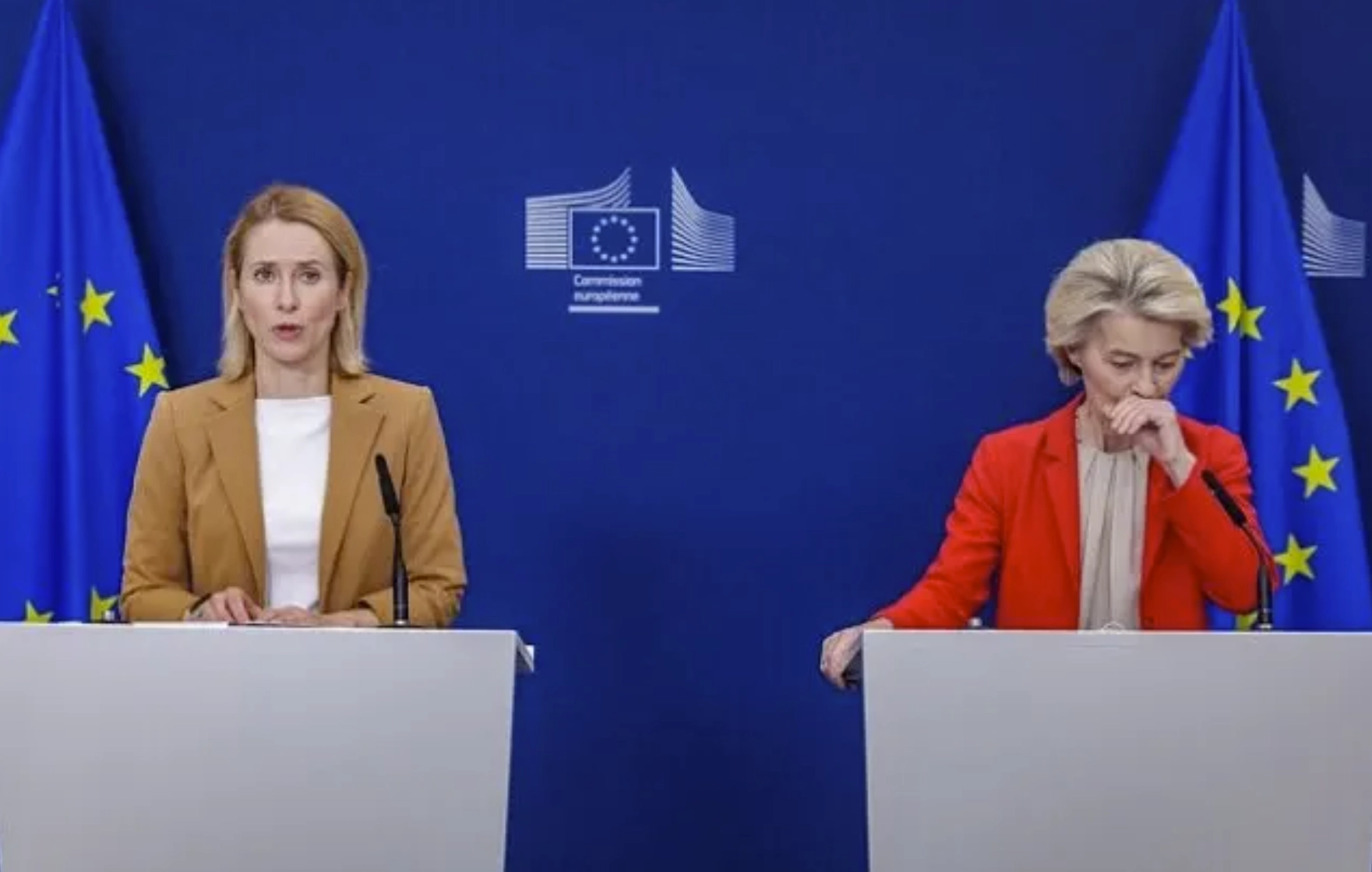
European Commission President Ursula von der Leyen has stated that the issue of Viktor Orbán’s ties with Moscow will be discussed at the informal EU summit on April 23–24 in Cyprus.
In this context, on behalf of the Belarus Democratic Forum, letters have been addressed to the heads of state and government of the European Union, as well as to European Council President António Costa and Ursula von der Leyen herself.
If the EU is prepared to examine political ties with Russia, it must apply the same level of scrutiny to economic relationships, which form the real foundation of any political engagement.
The central issue is the activity of Raiffeisen Bank International.
This is no longer merely a foreign bank operating in Russia. It has become a key financial channel through which the Russian economy adapts to sanctions.
The bank processes international payments for equipment, electronics, chemical products, and industrial components, while simultaneously generating billions in tax revenues for a state engaged in war.
In effect, Raiffeisen has become part of the infrastructure enabling the functioning of the economy under wartime conditions.
After 2020, the bank was also involved in schemes that led to the confiscation of property in Belarus, including cases affecting the rights of minors and the transfer of assets belonging to political opponents to the regime.
This goes beyond commercial activity. It concerns actions that affect fundamental rights and call into question compliance with international standards — from the UN Guiding Principles on Business and Human Rights to European Union law.
We have specifically drawn the attention of German Chancellor Friedrich Merz and Austrian Chancellor Christian Stocker to this issue, explicitly urging them not to provide political cover for the bank.
The history of these countries clearly demonstrates the consequences of tolerating the confiscation of property on political, religious, or national grounds.
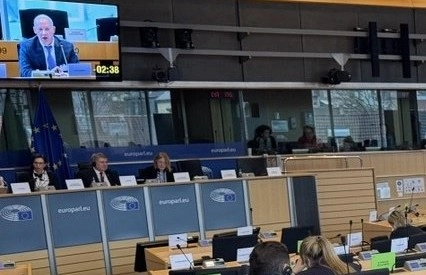
This matter is already under consideration in the European Parliament (Petition No. 1003/2025).
Direct inquiries have been submitted to the European Commission regarding equality before the law and the consistent application of sanctions.
We expect this issue to be addressed at the level of the European Council and to receive a clear moral and legal assessment.
Failure to do so would amount to a direct acknowledgment of a gap between the EU’s declared sanctions policy and its actual political and economic practice.
In that case, we will proceed to the next stage.
Given the transatlantic nature of sanctions policy, the issue will be taken beyond the EU, including the possible use of mechanisms such as the Global Magnitsky Act, which provides for measures not only against individuals but also against financial institutions and their management.