12 May 2026
In his report, Mario Draghi writes that Europe needs to build strategic relationships with countries that possess natural resources.
At the same time, he does not specify which countries he has in mind. Is he referring to Russia, with which Europe was tied energetically for decades but which attacked Ukraine? Or to Iran, where during the latest mass protests, by various estimates, tens of thousands of its own citizens were killed, executed, or repressed?
Such specifics are cautiously left outside the scope of the report, much like the topic of cryptocurrencies and new financial systems.
Draghi most likely did this deliberately, in order not to provoke discussions on issues to which neither he nor Europe as a whole has clear answers.
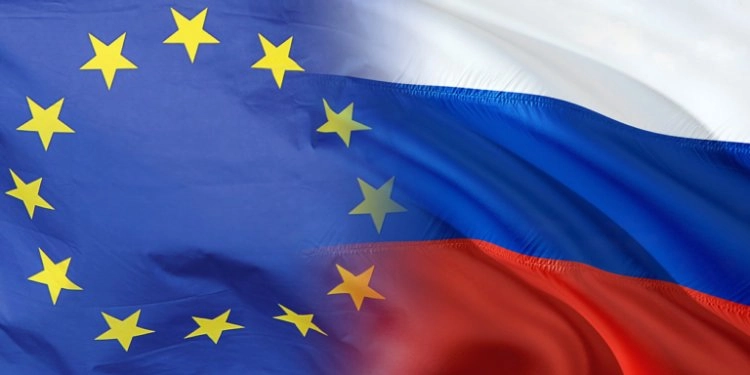
For example, the attitude toward Russia. On the one hand, Europe supports Ukraine, understanding the geopolitical consequences of a Russian victory for the entire European security system. On the other hand, it prefers to purchase Russian energy resources, metals, mineral fertilizers, and nuclear fuel, as this is more выгодно than seeking alternative suppliers.
The situation with gas is particularly illustrative. Despite harsh political rhetoric, in recent years Europe has become the largest buyer of Russian liquefied natural gas. In 2025, EU countries accounted for more than half of Russia’s LNG exports. Many EU states continue to actively purchase Russian enriched uranium for their nuclear energy sectors. Russia also retains about a quarter of the European market for mineral fertilizers.
But an even more interesting phenomenon has been the sanctions policy itself. From an instrument of political pressure, it has turned into a new mechanism for generating profits.
One need only look at the banking sector. After the outbreak of the war, American banks and financial companies withdrew from the Russian market for reputational or political reasons, and Russian banks were pushed out of the international market due to European sanctions. As a result, certain European banks gained a unique opportunity to earn сверхприбыли.
This primarily concerns Raiffeisen Bank International, which acquired a dominant position in a significant portion of international settlements related to Russia. In some years after the start of the war in Ukraine, a huge share of Russia’s foreign trade financial transactions passed through this bank—by some estimates reaching up to 50 percent—not only with Europe but globally. Restrictions introduced in the name of morality and geopolitics became a source of nearly exclusive access to a vast market of financial intermediation.
Through Raiffeisen Bank, transactions related to energy resources, industrial equipment, machinery, electronics, IT solutions, and many other goods critical to the Russian economy continued to flow. Over four years since the beginning of the war, Raiffeisen paid around €2 billion in taxes to the Russian budget, funds that were primarily directed toward financing military actions against Ukraine.
It is particularly telling that this role was played not by a Chinese, Indian, or Singaporean bank, but by a European financial institution operating within the legal framework of the European Union and formally subject to regulation by the European Central Bank, once headed by Draghi, as well as to European sanctions legislation, AML/CFT rules, and broader principles of compliance, corporate governance, and due diligence.
These proclaimed principles require not only formal compliance with sanctions but also an obligation to consider the broader consequences of one’s activities, including the risks of indirectly supporting economies under sanctions pressure, the impact on the EU’s foreign and security policy objectives, and issues of human rights and corporate responsibility. Under conditions where sanctions are officially presented as a tool to punish the aggressor and protect international law, Raiffeisen’s activities inevitably raise questions about their consistency with declared European principles of corporate responsibility, ethical governance, and respect for human rights.
Why does this happen? Why does someone receive a monopoly-like right to earn money in contradiction to the spirit of regulation? And this position was acquired by Raiffeisen almost naturally.
Clearly, Europe must trade with Russia—the issue is not trade itself. As Commissioner Maria Luís Albuquerque stated, Europe must ensure that Russia does not face famine due to food shortages or epidemics due to a lack of medicines.
Perhaps this is so, although Russia is one of the world’s leading grain suppliers. Following the Commissioner’s logic, one could hypothetically imagine a “shoemaker without shoes” situation, where conditions in Russia deteriorate настолько that it would have to export even the food currently used for domestic consumption. In such a case, maintaining channels of interaction could become lifesaving for the Russian population.
Yet the questions remain. Why is there no transparency in these transactions? Why was there no competition among banks to determine who could provide the best conditions for humanitarian transactions? Why is there no approval commission for such contracts, as was the case in the Oil-for-Food Programme?
Mario Draghi, who for many years led the European Central Bank and oversaw European financial institutions, undoubtedly understood that the EU sanctions system had become not only a tool of pressure but also a mechanism for redistributing economic opportunities. It created unique conditions for certain market participants, allowing them to extract enormous profits from the new geopolitical reality. As a well-known Russian proverb says: “For some, war is misery; for others, it is a mother dear.”
But he could not say this openly, naming specific banks that benefited from the sanctions regime. Just as he could not publicly list the resource-rich countries with which Europe should expand cooperation.
Because such an admission would undermine the entire moral and political framework of European sanctions policy, which is presented to society as a tool for protecting international law, security, and European values. It would inevitably raise uncomfortable questions: who exactly profited from sanctions, why some players were pushed out while others gained near-exclusive access to financial intermediation, and to what extent decisions were driven by principles versus corporate or personal interests.
What interests me, however, is not the hypocrisy of modern politics. Our eyes have only recently opened to it—we were naive, we believed in declarations from high tribunes and in beautiful words. But authoritarian leaders learned long ago to understand the real value of loud European statements. They know that there is a vast distance between a tweet condemning war or violence and the willingness to sacrifice one’s own comfort.
Vladimir Putin did not start the war because he underestimated Europe, but because he understood it too well. He saw the indecision of European elites, their dependence on Russian energy resources, their fear of economic downturn, and their unwillingness to sacrifice even minimal comfort for declared values.
He saw how Alexander Lukashenko calmly ignored calls from Angela Merkel and Emmanuel Macron in 2020, understanding that behind words about human rights there was no readiness for concrete action. Poland, despite having significant leverage over Belarus, failed to secure the release of its own journalist, preferring to preserve beneficial economic and transit arrangements with the regime—although it could have done so within weeks by blocking cargo transit from China to Europe. All this was carefully noted by Putin, reinforcing his belief that if Europe could not counter the Belarusian regime, it would have even fewer tools against Russia.
But a more fundamental question concerns me. Where did these regimes come from? Why did the postwar world—built on the United Nations Charter, international law, human rights, and the idea of the inadmissibility of violence—suddenly become an era of flourishing new types of dictatorships?
Why, after 1945 and the end of World War II, did the world begin to fill with authoritarian figures so different from their predecessors? Leaders increasingly resembled theatrical characters: endless parades, theatrical military uniforms, imposed personality cults, performative masculinity, and an almost feudal view of the state as a personal estate. Why did such figures emerge so often—figures whose appearance even literature could hardly have anticipated?
Why has history entered a new cycle, but with characters that resemble caricatures more than the authoritarian leaders of the prewar period? As Georg Wilhelm Friedrich Hegel once observed, history repeats itself twice: first as tragedy, then as farce.
And is the very existence of such regimes a product of the new global order, supported by the world economic system, in which Europe itself plays a central role?
Behind these questions lies one of the most underestimated and least studied phenomena of the 20th and 21st centuries—one that we will explore further.
To be continued.