16 April 2026
We return to the report by Mario Draghi.
If we set aside the abundance of general formulations such as “the EU will need to coordinate preferential trade agreements and direct investment with resource-rich nations,” “build up stockpiles in selected critical sectors,” and “create industrial partnerships to secure the supply chains of key technologies,” along with the familiar slogans that permeate the report, its main value lies elsewhere.
It captures a rather sobering reality in which modern Europe finds itself when viewed through the lens of global competitiveness.
A tacit acknowledgment of Trump’s argument
The report contains a fundamentally important admission—one that European policy has long sought to avoid: the EU’s economic model has for decades relied on an external source of security.
The formulation is strikingly candid: the American “security umbrella” allowed Europe to reallocate resources—reducing defense spending and redirecting funds toward social and domestic priorities.
In other words, Donald Trump’s claim that Europe has underinvested in defense was not merely political hyperbole. Draghi, in effect, validates the substance of that argument: Europe’s welfare model has been financed, in part, by a geopolitical architecture provided by the United States.
The paradox of the European model
Yet this acknowledgment leads to an uncomfortable question—one the report leaves unanswered. If Europe spent significantly less on defense for decades and was able to channel resources into internal development, it should have emerged as a leader in both economic performance and innovation.
But the opposite occurred.
The GDP gap between the EU and the US has widened. Since 2000, income growth in the United States has been nearly twice as fast as in Europe. Over half a century, Europe has failed to produce a single new global-scale technology company, while the United States created all major corporations of the digital age. As Draghi directly notes, “over the past 50 years, no company with a market capitalization above €100 billion has been created from scratch in Europe.” By contrast, six companies in the US have surpassed $1 trillion in market value over the same period.
Between 2008 and 2021, nearly 30% of European “unicorns”—companies valued at over $1 billion—relocated their headquarters outside the EU, overwhelmingly to the United States. Today, only 4 of the world’s 50 largest technology companies are European.
The so-called “peace dividend”—the ability to minimize defense spending for decades—was not converted into technological leadership. It was effectively consumed, leaving behind neither a technological breakthrough nor a new model of growth.
At this point, Draghi should have posed a key question: why did a system with additional resources use them so inefficiently? Why did the United States, despite significantly higher defense spending, not only maintain but substantially expand its technological leadership and economic advantage? Did Europe make effective use of its advantage—the ability to spend less on security than the US?
But this question is not raised in the report.
To sharpen the picture, the author should have compared not only with the US, but also with China. We attempt to fill this gap:
0 |------------------------------------------------
-50 | █
-100 | ███
-150 | ██████
-200 | █████████
-250 | ████████████
-300 | ████████████████
-350 | ███████████████████
-400 | ███████████████████████
2000 2005 2010 2015 2020 2025
The chart shows that over the past two decades, the EU’s trade deficit with China has grown from approximately €50 billion to €400 billion annually. Twenty years ago, Europe held leading positions in telecommunications and ICT. Companies such as Nokia, Ericsson, and Philips shaped the global agenda. Today, that role has been lost: 5G technologies are developed and produced in China, while key digital platforms—Amazon, Google, and Apple—are concentrated in the United States.
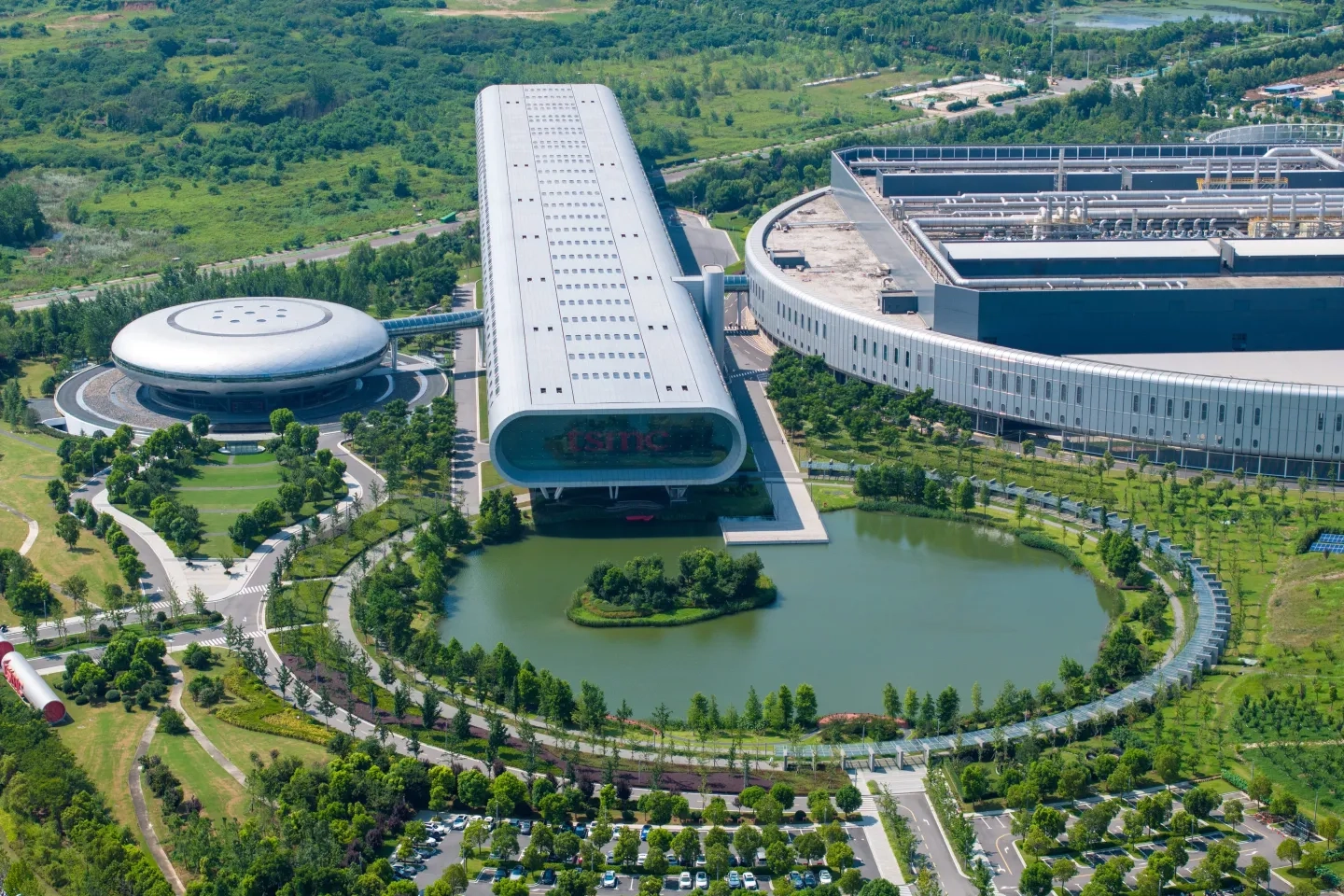
This shift has affected the entire technological foundation of the economy. Europe has lost ground in microelectronics: despite strong capabilities in equipment (ASML), it is largely absent from mass semiconductor manufacturing. As a result, it has effectively lost the production of consumer electronics—smartphones, computers, laptops, televisions.
This is compounded by lagging performance in battery technologies, which is already directly impacting Europe’s position in electric vehicles.
According to the European Central Bank, the share of sectors in which China directly competes with euro area exporters has increased from 25% in 2003 to nearly 40% in 2023. In other words, Europe is losing ground simultaneously in traditional sectors and in the technologies that could have compensated for these losses.
Energy and economic structure: an unresolved contradiction
The report simultaneously presents two positions that are difficult to reconcile.
On the one hand, it highlights the high cost of energy in Europe: electricity prices for companies are 2–3 times higher than in the US, and gas prices 4–5 times higher. On the other, it emphasizes that Europe’s strength lies in industrial production, including machinery and engineering.
Logically, higher energy costs should place the greatest pressure on industry. Yet the opposite occurs. European industry remains competitive despite expensive energy, while European technology companies—more dependent on human capital—display clearly weak global positions.
The report identifies this paradox but offers no explanation. Why does Europe maintain its industrial base while falling behind in technology? Why do energy-intensive sectors remain resilient, while less energy-dependent technology sectors lag behind?
Without answering this question or identifying the causes of this phenomenon, Draghi’s recommendation to prioritize traditional industrial production appears unclear—especially given that electricity costs in Europe significantly exceed those in the US and China.
How can this be achieved under structurally higher costs for energy and raw materials? The report provides no answer.
The proposed prescriptions, such as to “maintain industrial leadership” and “develop breakthrough technologies” remain overly general. Calls such as “only together can we create the necessary market leverage” also fail to answer the fundamental, almost classical questions: “who is to blame?” and “what is to be done?”
To be continued.