25 May 2026
I recently watched an interview about how Taiwan built its semiconductor industry. Inevitably, I found myself comparing that story with today's Belarusian reality, where the leading news once again was Lukashenko's visit to a collective farm and his proposal to send underperforming workers to the army to the Ukrainian border.
Today, Taiwan is the world's leading producer of semiconductors. More than 330,000 people work in the industry, with an average annual compensation of around US$130,000—roughly US$11,000 per month.
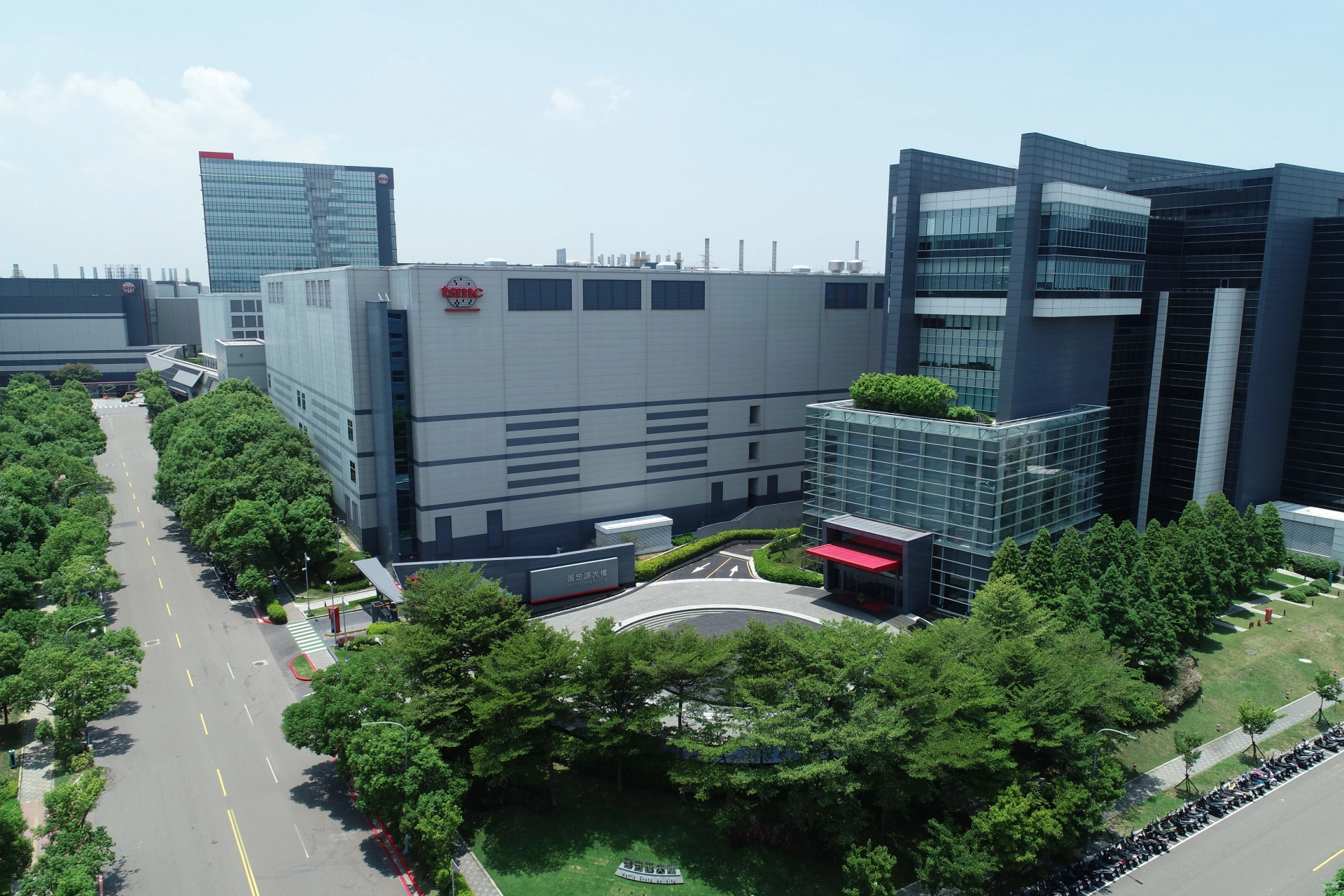
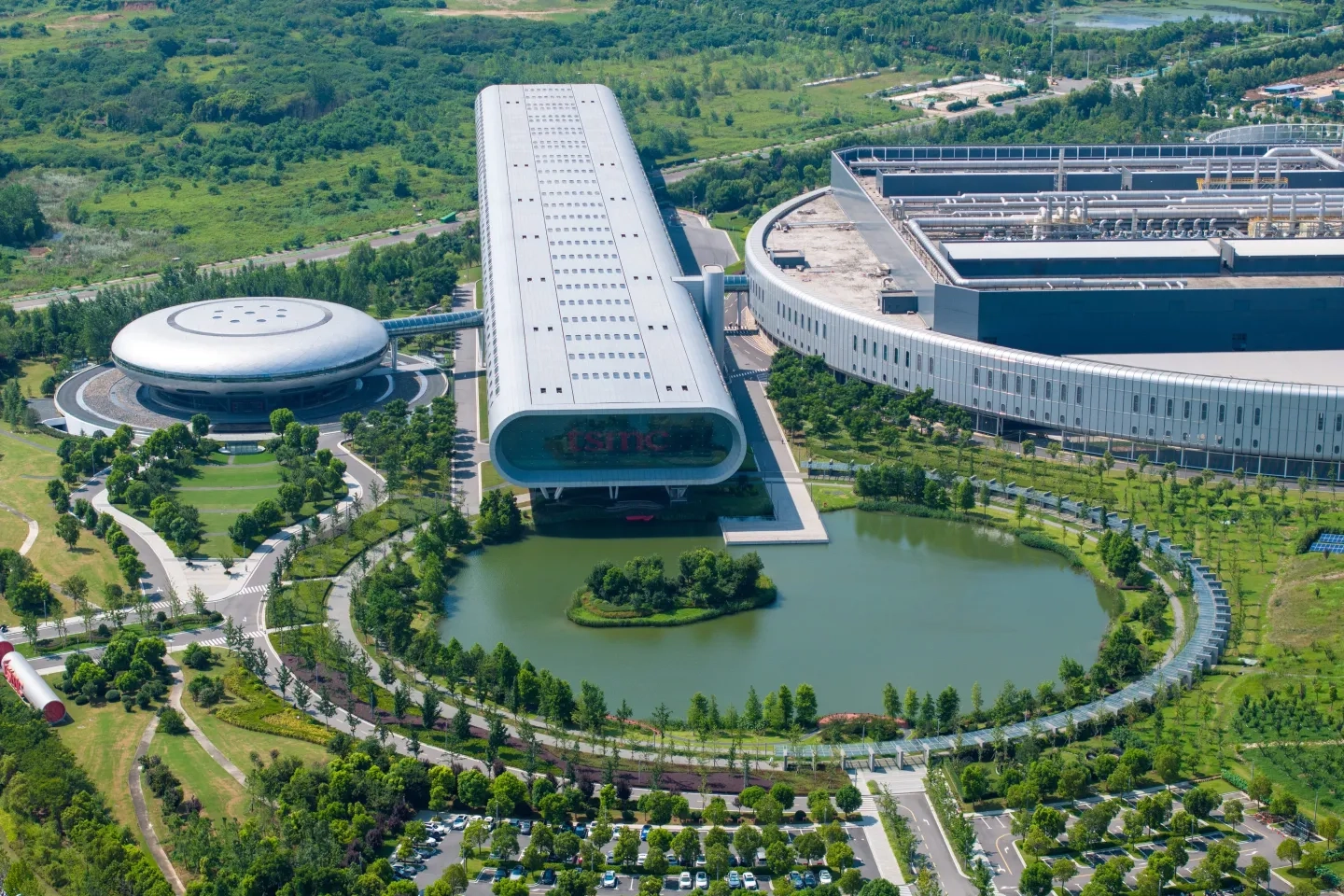
Taiwan Semiconductor Manufacturing Company (TSMC) is the world's largest semiconductor manufacturer. The company produces more than 90% of the world's most advanced microchips. Technology giants such as Apple, Nvidia, and Qualcomm rely on TSMC to manufacture the chips that power modern smartphones, artificial intelligence systems, and many of today's most advanced computing technologies.
Yet in the early 1980s, Taiwan was significantly poorer than Belarus. It had no oil, no natural gas, no potash reserves, and no vast forests. The island was effectively isolated politically. Even today, most countries do not officially recognize Taiwan as a sovereign state, and it continues to live under the constant threat of military conflict with China.
Belarus, by contrast, possessed enormous industrial potential. By the early 1990s, its independence had been recognized worldwide. The country had an outstanding engineering workforce, one of Europe's strongest traditions in mathematics and physics, and world-class industrial enterprises such as MAZ, MTZ, BelAZ, Integral, Peleng, the Research Institute of Electronic Computers (NIIEVM), and dozens of other research and manufacturing centers.
Taiwan had none of these advantages.
What it did have was a patriotic leadership capable of thinking strategically and embracing the future.
Several decades later, the results speak for themselves. Taiwan has become the world's leading producer of advanced semiconductors—the chips that power everything from modern automobiles and smartphones to defense systems and artificial intelligence. The country's average monthly salary is around US$2,300, while its GDP is approaching US$1 trillion.
Belarus, meanwhile, has watched nearly every industry in which it once excelled steadily decline. The average monthly salary barely reaches US$500, and the country's GDP stands at roughly US$90 billion.
And the gap continues to widen every single year.
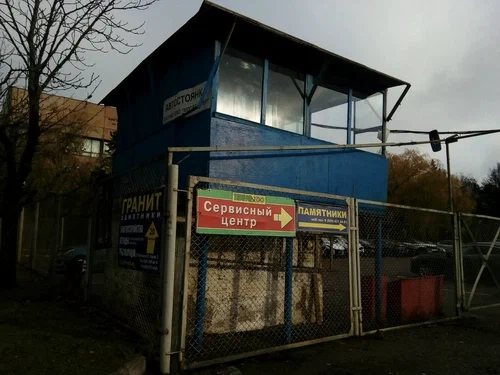
Service Center. Minsk Computer Manufacturing Association, one of the Soviet Union's leading computer manufacturing enterprises. Today.
Many years ago, I wrote an economic essay entitled The Dragon's Way, examining the experience of countries that had achieved extraordinary economic transformation. Later, I translated and published The Way Forward by Malaysia's Prime Minister Dr. Mahathir Mohamad, a book describing the country's remarkable development under his leadership. Both publications pursued the same objective: to propose a program of economic reforms for Belarus based on the experience of the most successful economies of Southeast Asia.
Interestingly, Nobel Prize-winning economist Milton Friedman arrived at many of the same conclusions. He repeatedly held up Hong Kong as a model for the entire world—not for developing countries alone, but for the United States and Europe as well. His books and television programs profoundly influenced an entire generation of political leaders. Ronald Reagan, Margaret Thatcher, and Jacques Chirac all drew, to varying degrees, on Friedman's ideas as they pursued economic reforms centered on free enterprise, private initiative, and competitive markets.
These leaders did not suffer from delusions of grandeur. They did not dismiss successful foreign experience out of arrogance. Instead, they were willing to learn from whatever worked—even if those lessons came from a small British colony like Hong Kong.
Belarus's leadership, by contrast, remained deeply conservative—rooted in the mentality of a Soviet collective farm. It proved incapable of understanding these ideas or choosing the path of modernization. Whenever I pointed to China's reforms as an example, my arguments were met with condescending smiles or outright laughter, accompanied by an old Soviet joke about Chinese peasants supposedly so desperate for food that they dug up and ate the potatoes they had just planted.
I therefore chose a different path. Rather than trying to reform the entire economy at once, I decided to create an economic enclave that could operate with a high degree of autonomy from the rest of Belarus's economy—an economy subject to the hands-on control of a leader who was hardly the world's most competent manager. That is how the idea of the Belarus Hi-Tech Park was born.
For me, Southeast Asia was not only a source of inspiration but also a source of investment, technology, and management expertise.
I succeeded in attracting numerous European, American, and Asian companies to the Hi-Tech Park while also helping hundreds of Belarusian technology firms emerge and grow. Among the partnerships I remember most vividly were those with South Korea's SK hynix, one of the world's leading manufacturers of semiconductor memory used in artificial intelligence systems, and Taiwan's HTC, which at the time ranked among the world's three largest smartphone manufacturers.
My goal was never simply to attract foreign investors. I wanted to halt the decline of Belarus's engineering tradition and restore the country's place among the world's technologically advanced nations—to make Belarus known not only for potatoes, but also for its engineers, innovation, and cutting-edge technologies.
Together with our Korean partners, we established a new school of semiconductor design and chip modeling. Our cooperation with Taiwan's HTC became one of the key catalysts for the emergence of Belarus's mobile application development industry, which had scarcely existed before. It was from this ecosystem that globally successful companies such as Viber—and many others—eventually emerged.
Had we succeeded in 2020, Belarus today would not be struggling to avoid becoming Europe's poorest country. Instead, it would be competing for a place among the world's leaders in semiconductors, software development, and artificial intelligence.
One former employee of a Hi-Tech Park company, Denis Yarats, is now the co-founder and Chief Technology Officer of Perplexity, one of ChatGPT's leading global competitors. Belarus would never have lost companies such as Wargaming, PandaDoc, Viber, and many other technology firms that were ultimately forced to leave the country.
Had the Hi-Tech Park maintained its previous rate of growth, it would today employ around 250,000 specialists, with average monthly salaries approaching US$5,000. Exports of IT services would exceed US$15 billion annually, and Belarus would be well on its way to becoming the Silicon Valley of Europe.
Instead of discussing artificial intelligence, semiconductors, and the technologies that will shape the future, Belarus continues to be consumed by news about livestock farms, piglets dying from starvation, and cows standing knee-deep in manure.
Belarus has become a vivid illustration of what can happen when a country's leader places personal interests above those of the nation and continues to govern with the mindset of a collective farm instead of investing in technology, education, and the future.