26 February 2026
Throughout the entire history of human civilization, economic logic was remarkably simple: power concentrates in scale. The larger the state, the larger the market. The larger the city, the higher the density of capital, labor, and ideas.
In the pre-industrial era, mass meant control over land, food, and people. Agrarian and nomadic empires rested on population size, the ability to collect taxes, generate grain surplus, and mobilize armies. Political power directly depended on demography and territory: the more land, the greater the harvest; the more subjects, the greater the resources; the more people, the more warriors.
The industrial age only reinforced this logic. Factories required concentrations of workers, railways demanded enormous capital investments, and mass production required large consumer markets. Thus empires competed, and later nation-states. The economy was material, heavy, and large-scale.
The last decades have altered this centuries-old trend. The focus shifted from states to megacities. It was no longer countries as such that competed, but cities — Singapore, Dubai, London, San Francisco, Berlin as nodes concentrating capital, universities, startups, venture funds, and data centers. It was in such places that ecosystems emerged where ideas could be implemented quickly, without layers of bureaucracy or historical inertia. It was to these hubs that the “people of air” gravitated, a mobile class for whom work was no longer tied to land or machinery.
But the digital era is transforming even this configuration.
When production moves into the cloud and the cost of copying an idea approaches zero, what becomes decisive is not the size of territory but the speed of information exchange. Under such conditions, the advantages of giant cities begin to erode. London and San Francisco still concentrate capital and prestige, but they are increasingly burdened by their own success: high living costs, infrastructure overload, rising taxes, and regulatory complexity increase the costs for digital businesses.
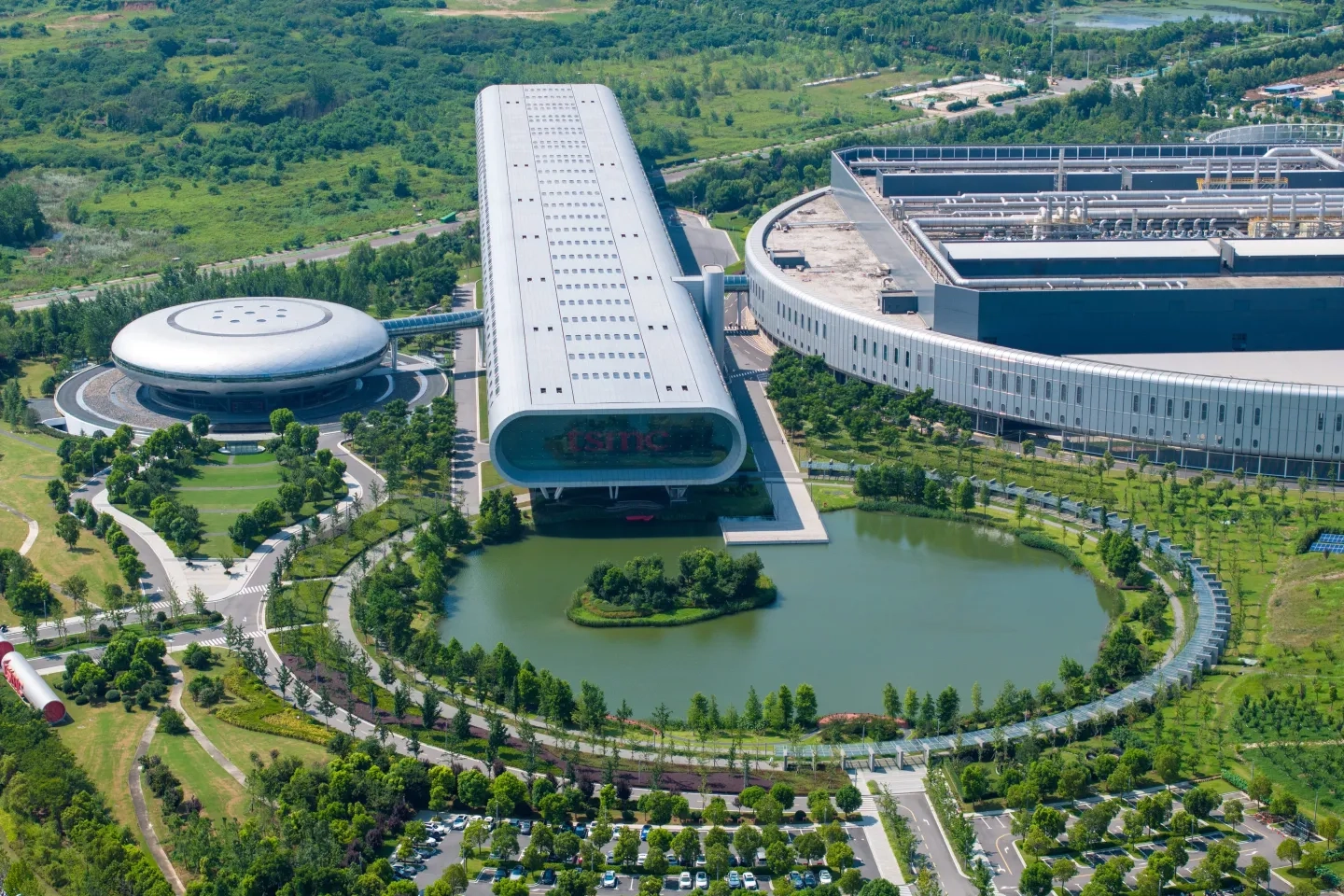
Against this backdrop, a different type of city begins to gain ground — compact, well-equipped infrastructurally, and intellectually dense. Cambridge in the United Kingdom, Leuven in Belgium, Boulder in the United States, Eindhoven in the Netherlands, where around Philips and ASML a key national high-tech hub has formed, marked by a high concentration of engineering and semiconductor technologies. Grenoble in France. Trieste in Italy... .
Especially illustrative is Medellín — one of the most remarkable cases of urban transformation in Latin America. Once globally associated with the narcotics trade and the violence of the Medellín cartel, the city has undergone a profound reinvention, emerging as an innovation center that actively supports startups and attracts international digital entrepreneurs. The same category includes Florianópolis in Brazil, Punta del Este in Uruguay, Córdoba in Argentina, and other emerging nodes of a new global network.
Here, distances are measured not by time spent in traffic jams, but by bicycle routes. In such cities, researchers, entrepreneurs, and investors find themselves within a single ecosystem, where meetings occur not strictly by formal schedule, but organically - at conferences, in laboratories, co-working spaces, and university halls.
It is precisely in these environments that powerful scientific and technological clusters are formed: a high concentration of research centers, deep-tech startups, and venture capital combines with manageable scale and low infrastructural friction. The example is telling: Microsoft is based in Redmond, a city far smaller than Seattle; NVIDIA is located in Santa Clara.
Silicon Valley itself dictates not only technological fashion, but also a new urban model. It is not a single megapolis, but a network of medium-sized municipalities united by infrastructure and capital. A similar picture can be observed in Europe: Roche, one of the global leaders in pharmaceuticals, is located in Basel, a city with a population of about 170,000. Denmark’s Novo Nordisk, specializing in diabetes treatment and biotechnology development, has its headquarters in Bagsværd rather than in the capital, Copenhagen.
This process can be described as a fragmentation of centers of gravity. The center is no longer monolithic and no longer automatically coincides with a geographic capital or the largest megacity. It fragments into specialized nodes, each concentrating a particular competence: microelectronics, biotechnology, fintech, artificial intelligence, gaming.
In such an architecture, it is not the city that gathers the maximum number of people from diverse professions and fields that wins, but the one that forms a critical mass of expertise in a specific domain and integrates it into global value chains.
The center is no longer defined by the number of skyscrapers housing banks and corporate headquarters. Moreover, traditional financial institutions themselves are gradually losing their monopoly over capital infrastructure: neobanks, fintech platforms, and digital payment systems allow the management of financial flows without attachment to a specific financial district.
Why is this happening?
First, the digital economy reduces dependence on physical proximity to the market. A product can be developed in Cambridge, sold in California, and financed by a Singaporean fund. The production of knowledge, code, and intellectual solutions does not require being located in a capital city. Geography ceases to dictate limits. Sales channels and investments become global by default.
Second, innovation requires not scale as such, but concentration of intellect. In a small city, specialists meet faster and more frequently; a single meeting does not require crossing vast distances. University seminars, accelerators, and research centers create a dense intellectual field. As a result, professional communities become more focused and interconnected than in large cities where interests and directions are scattered.
Third, for the mobile class, economic rationality becomes decisive. What matters to them are not symbols or the prestige of an address, but operational efficiency: fast internet, airport access, clear rules of the game, and a balance between cost of living and opportunity. When rent in a megacity begins to consume entrepreneurial risk, choosing a smaller city becomes a pragmatic decision.
As a result, the world ceases to be a pyramid with a center and a periphery. It becomes a network of nodes of varying specialization and scale, each of which can be global regardless of population size.
And this trend will intensify. As remote work, cloud services, digital jurisdictions, and transnational professional communities continue to develop, what will matter increasingly is not the size of a city, but the quality of its integration into global flows of knowledge, capital, and technology. Competition will involve not so much countries and megacities, but human-scale cities capable of quickly adapting to technological change, creating a comfortable environment for experimentation, retaining talent, and reducing operational costs and time for the mobile class.
For the first time in human history, the unmaking and remaking of the world is not carried out by the force of arms or by the number of mobilized soldiers, but by the freedom of individual choice. If the first, religious, and the second, ideological, turns were accompanied by inevitable wars, territorial divisions, and the mobilization of millions, the third turn marks the end of the era of masses as the principal instrument of history. It occurs without revelations and without slogans, without armies and without fronts. It unfolds quietly, through the redistribution of human capital across geographic space.
It is carried out by new nomads or the “people of air”, who freely choose where to live, work, and create, forming specialized communities not tied to specific countries or megacities. They do not seize territories; they transfer their values, competencies, and future to places where the environment proves more open and attractive. In doing so, they open spaces of prosperity for small cities that manage to integrate into global flows and find their specialization. Simultaneously the process of economic stagnation and depopulation occures in those territories that fail to integrate into the new architecture of the world.
If the first redistribution of the world divided humanity by faith, and the second by state borders and ideologies, the third divides it by the ability to be included in global flows of knowledge, capital, technology, and human mobility. This is no longer East and West, nor North and South. This new fault line runs between territories that possess strong universities, predictable rules for digital business, developed digital infrastructure, access to international markets, and airports ensuring mobility and those spaces, where such conditions do not exist.
In the first case, nodes of attraction are formed, where talent and capital concentrate and the future is created. In the second, people leave, the economy contracts, and the territory begins to fade, remaining on the map merely as a geographical notion. Residents will still live there, and year after year leaders will point to problems of low yields, weak productivity, and livestock losses, redistributing ever-scarcer resources and calling it stability.
Such spaces will be occupied with primitive survival rather than with designing a project of the future. Their agenda will revolve around preserving the past, while new breakthroughs and technologies will be formed elsewhere, where there is economic freedom, creativity, clear conditions for work and life, specialization, and an inflow of human capital.
In essence, we are already witnessing this process: the map of the world is changing through the trajectories of people who choose an environment of development rather than one of stagnation and decline.