9 April 2026
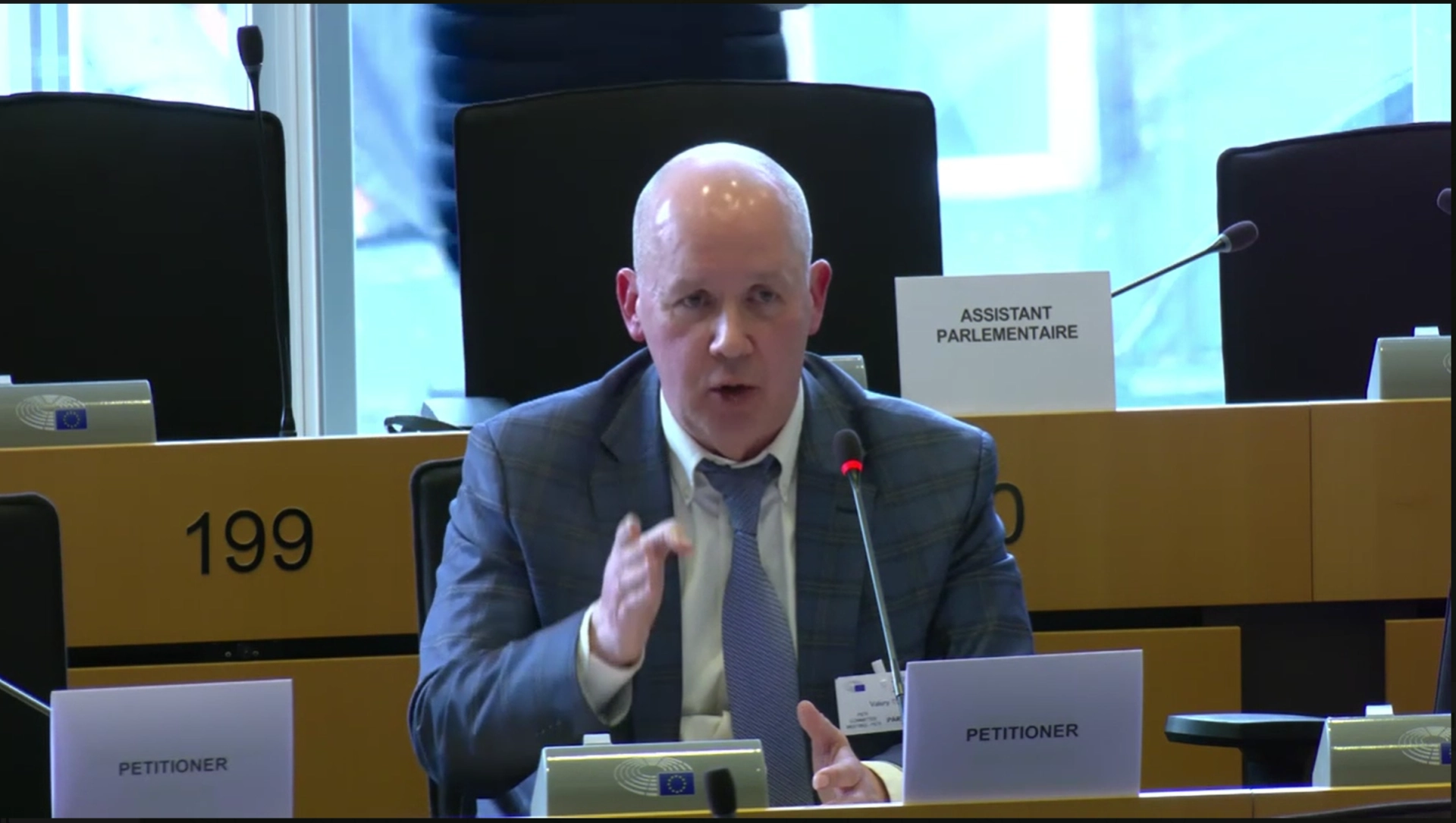
A hearing was held in the European Parliament on a petition concerning Raiffeisen Bank International, submitted by Dr. Valery Tsepkalo on behalf of the Belarusian Democratic Forum.
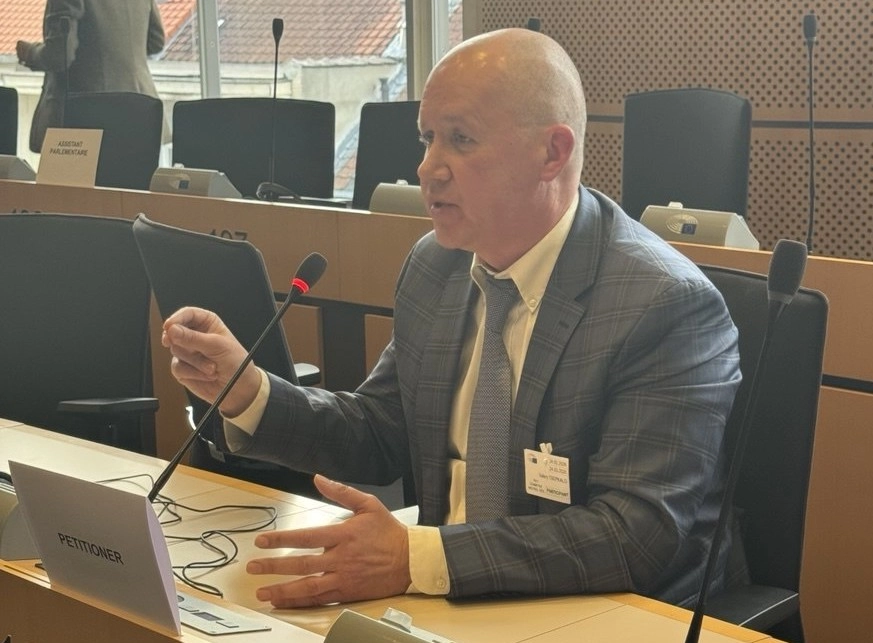
The Austrian banking group has effectively assumed a monopolistic position in servicing financial flows related to Russia and, despite the sanctions regime declared by the European Union, facilitates more than half of the country’s foreign trade operations.
Under the guise of so-called “humanitarian engagement,” a de facto redistribution of the market is taking place. Following the withdrawal of major European and American banks such as Deutsche Bank, Société Générale, HSBC, and Citigroup, Raiffeisen remains the only major European financial institution continuing full-scale operations in Russia and deriving direct competitive advantages from this position.
At the same time, Raiffeisen is the only European bank whose activities — both in Russia and in Belarus, including involvement in processes linked to the confiscation of property from political activists by the regime of Alexander Lukashenko — have not triggered any response from the European Commission or European supervisory authorities. This may indicate the existence of double standards and the selective application of EU law.
The privileges enjoyed by Raiffeisen on the European market point to systemic violations of EU competition law. In particular, this concerns Articles 101 and 102 of the Treaty on the Functioning of the European Union (TFEU), which prohibit anti-competitive practices and the abuse of a dominant position, as well as Article 18 TFEU, which enshrines the principle of non-discrimination. In effect, a situation has been created in which a single financial institution is granted exceptional operating conditions unavailable to its competitors.
Such practices also raise concerns under Article 4(3) of the Treaty on European Union (TEU), which obliges Member States to ensure not only formal but effective and consistent application of EU law, including sanctions regimes. The creation of privileged conditions for a single market participant calls into question equality within the internal market and turns sanctions policy into an instrument of selective enforcement.
During the hearing, a direct question was raised: how is it that while companies and individuals face asset seizures, frozen accounts, and travel restrictions, Raiffeisen and its leadership are reporting record profits?
The answer is obvious: they profit precisely from these restrictions.
Sanctions that were intended to exert pressure are, in practice, creating exceptional operating conditions for Raiffeisen. As a result, sanctions policy is effectively being transformed into a mechanism for redistributing markets in favor of selected actors.
Full statement available here -
https://tsepkalo.com/en/publications/politics/petition-presented-before-the-european-parliament
Regrettably, representatives of the European People’s Party, to which European Commission President Ursula von der Leyen belongs, left the chamber before the discussion on the equal application of sanctions began and did not participate in the debate.
It cannot be excluded that this was merely a coincidence. However, at the very moment when the issue of equal rules and sanctions enforcement was being discussed, their absence from the debate appeared, at the very least, striking — especially given that they are among the most vocal advocates of sanctions policy.
The petition received unanimous support from all Members of the European Parliament present. During the debate, it was explicitly supported by representatives of the Social Democrats (S&D), the liberal Renew Europe group, as well as members of the conservative wing of the Parliament. Other Members expressed their support through the vote.
This demonstrates that the issues raised in the petition are cross-party and pan-European in nature and require a public and substantive response from the European Commission, the European Central Bank, and relevant regulatory authorities, as well as the adoption of appropriate decisions.